

PET, PETG, and PP can all appear in a cosmetic packaging quotation, yet they do not solve the same problem. PET often leads on cost-efficient clarity, PETG can support a thicker, glass-like presentation, and PP is frequently chosen where flexibility, chemical tolerance, or a component such as a cap, pump, or jar matters. The useful question is therefore not which resin is best in general, but which material fits the formula, package geometry, filling process, decoration, and sales channel as one system.
For beauty brands sourcing plastic cosmetic bottles, a material name on a sample is only the beginning. Jaunce industrial recommends confirming the resin grade and complete pack specification, then testing the final formula in the decorated package with the intended closure. This approach turns a broad PET vs. PETG or PP vs. PET comparison into a decision that can survive production.
The Short Answer: Start With the Package Job
Use this shortlist to begin a supplier discussion, not to approve a package without testing:
- PET is a practical starting point for clear toner, cleanser, body-care, and other rigid bottle formats when visual clarity, low weight, and commercial efficiency are priorities.
- PETG is worth evaluating when a thick wall, high-clarity look, complex shape, or premium visual effect is more important than choosing the most common bottle resin.
- PP is a strong candidate for caps, pumps, airless components, flexible living-hinge closures, and opaque or translucent jars and bottles. Its suitability still depends on the formulation and grade.
A package may use more than one resin. For example, a PET bottle can be paired with a PP pump or cap. That combination can be functionally sound, but it also affects decoration, component fit, and recycling claims. Evaluate the assembled pack rather than judging the bottle body alone.
Why Similar-Looking Plastics Behave Differently
PET and PETG are related polyester materials, while PP belongs to the polyolefin family. Their different polymer structures influence stiffness, clarity, forming behavior, surface feel, and interaction with heat and chemicals. Those properties also vary by resin grade, colorant, recycled content, wall thickness, molding method, and supplier process. A generic property chart can narrow the options, but it cannot predict the performance of a specific cosmetic package.
PET: Clear, Lightweight, and Commercially Familiar
PET is widely used for rigid bottles because it can deliver high clarity with relatively low package weight. It is a logical candidate for a toner bottle range, micellar water, cleanser, or body lotion when shoppers need to see the product and the brand needs efficient transport. PET also accepts many common decoration routes, subject to the coating, ink, and surface preparation chosen for the project.
Its limitations should shape the test plan. A clear bottle exposes the formula to light unless color, coating, a label, or secondary packaging adds protection. Temperature limits and chemical resistance depend on the exact grade and processing history. Do not assume a standard PET bottle will tolerate hot filling, aggressive solvents, essential-oil-rich blends, or repeated high-temperature handling. Confirm the supplier’s allowable conditions and run formula compatibility tests.
PETG: Premium Clarity and Design Freedom
PETG is glycol-modified and is often selected for thick, clear components with a glass-like visual impression. It can support premium skincare packs, display-heavy retail concepts, and shapes where toughness during handling is valuable. In a side-by-side sample review, brands may prefer PETG when wall thickness, edge definition, or perceived substance matters more than minimizing resin weight.
That premium appearance does not make PETG automatically superior. Cost, processing route, available molds, decoration adhesion, scratch visibility, and the local recycling stream must be reviewed. Formula resistance is also not universal. Request the exact material designation and test finished samples; the word PETG alone is not a performance warranty.
PP: Functional Flexibility for Jars, Caps, and Pumps
PP is commonly used where a package needs toughness, some flexibility, or an integral hinge. It is therefore important in caps, pump components, airless systems, and cream jar formats. PP is naturally less glass-like than clear PET or PETG, although color, frosting, multilayer construction, and decoration can produce many visual effects.
For formulas containing oils, surfactants, or active ingredients, PP may be a useful candidate, but compatibility still needs evidence. Molded dimensions, closure torque, liner choice, seal surfaces, and stress after assembly can matter as much as resin chemistry. Heat tolerance also varies with the grade and package design, so filling specifications should be approved with the supplier rather than inferred from a generic material datasheet.
PET vs. PETG vs. PP at a Glance
| Decision factor | حيوان أليف | بتج | ص |
| Typical visual direction | Clear, lightweight rigid bottle | Thick, clear, premium look | Opaque or translucent functional pack |
| Common cosmetic roles | Toner, cleanser, lotion, body care | Premium bottle or jar concepts | Jars, caps, pumps, airless parts |
| Design consideration | Efficient bottle formats | Thick walls and shaped components | Hinges, flexible parts, molded function |
| Key validation | Light, heat, formula, decoration | Formula, scratch, process, recycling route | Seal, torque, formula, heat, component fit |
Match Material to the Product Format
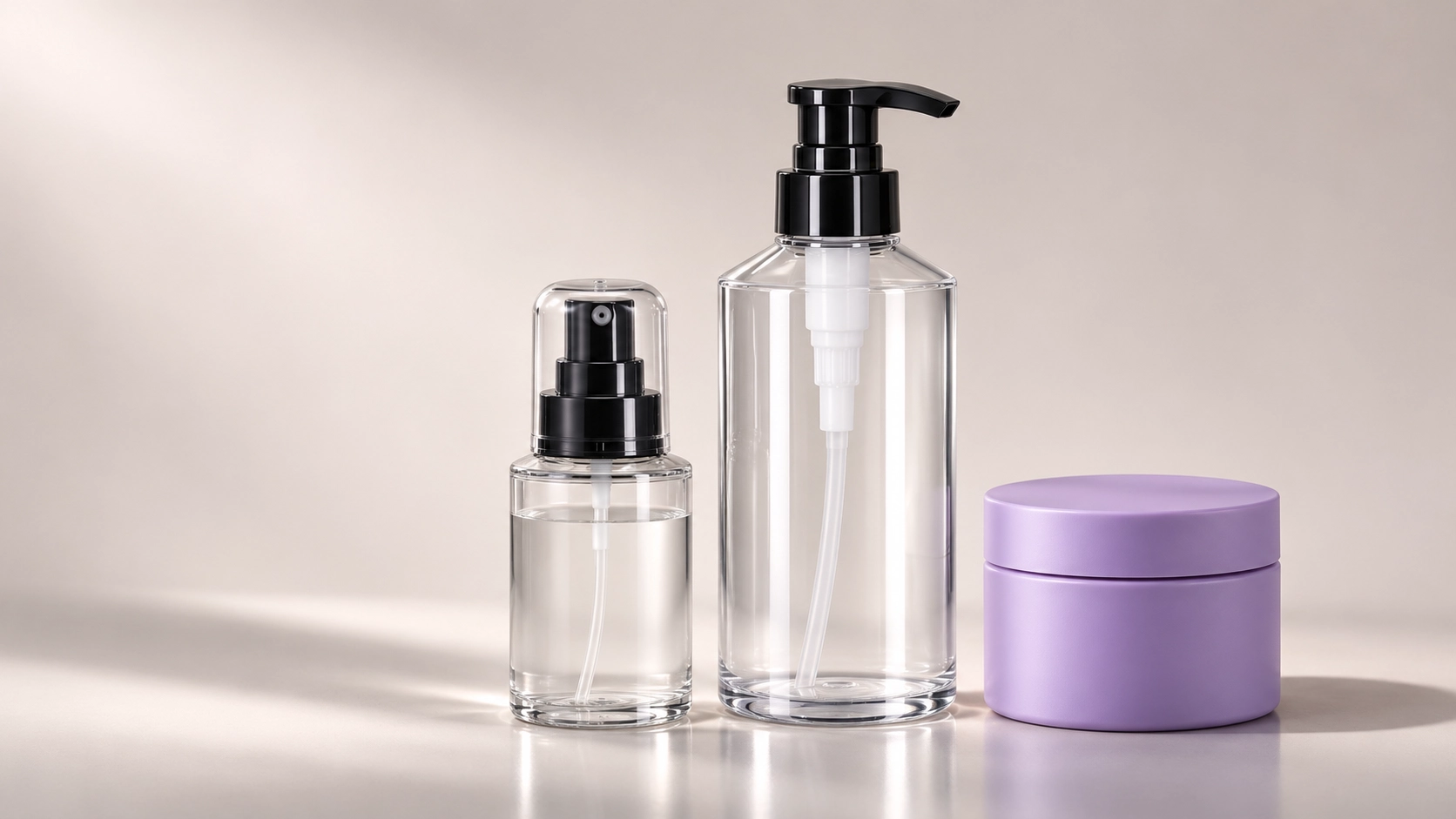
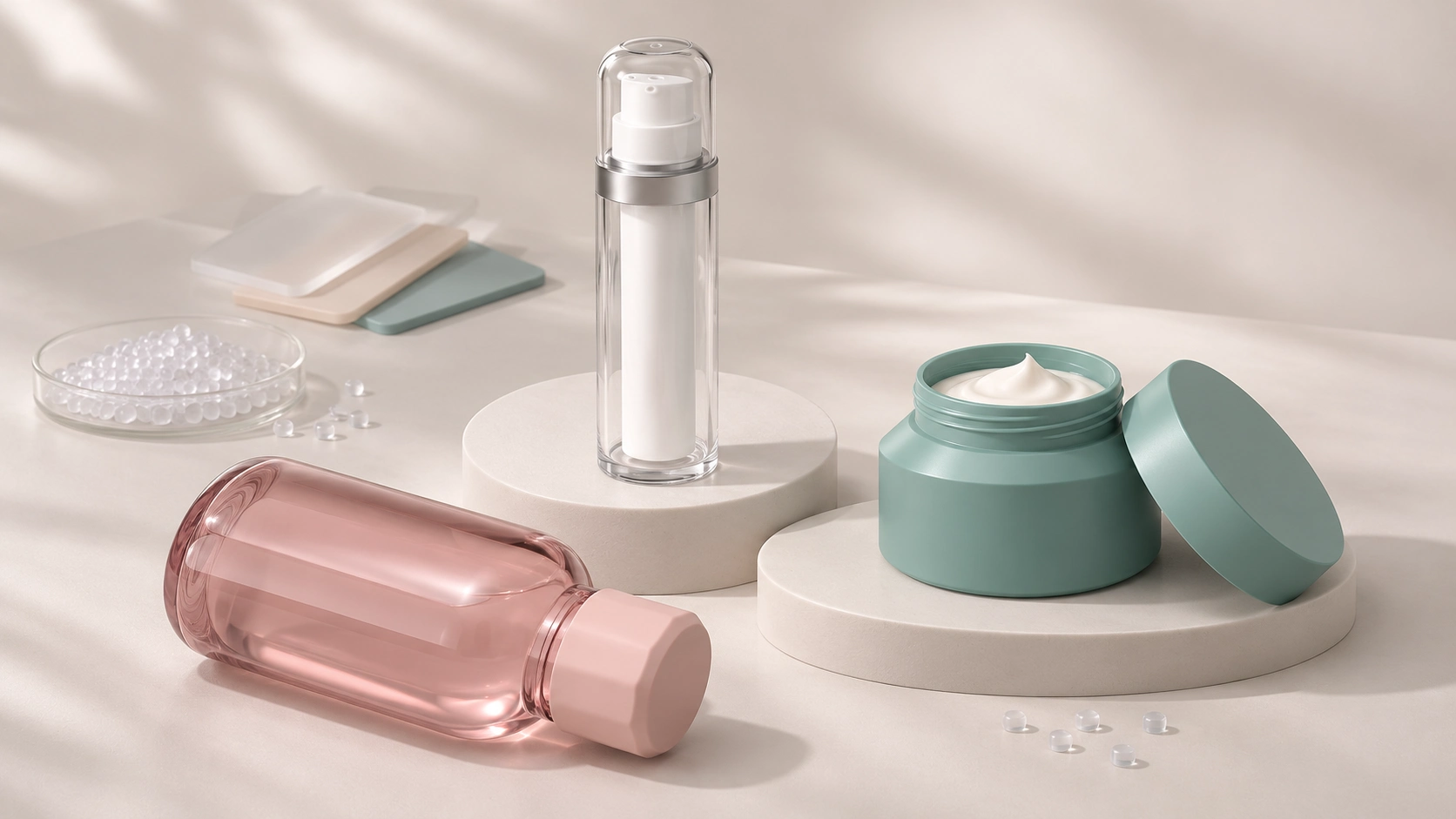
A practical shortlist starts with how the product is dispensed. Clear PET or PETG may suit a toner or cleanser when product visibility supports the brand. PET bottles with matched pumps can work for many daily-use lotions, while PP jars and airless components may fit creams and treatment products. Review Jaunce industrial’s lotion bottle options to compare bottle-and-pump systems rather than isolated bottle bodies.
Do Not Approve the Resin Before Compatibility Testing
Compatibility testing should use the production-intent formula, colorant, fragrance, preservative system, container, closure, liner, gasket, decoration, and label. Fill samples at the intended level, close them with controlled torque, and store them upright, inverted, and on their sides under conditions chosen by the brand’s technical team. Include realistic heat, cold, light, vibration, and time exposures for the target market.
Inspect for weight change, odor change, discoloration, swelling, paneling, cracking, warping, stress whitening, leakage, pump output, dip-tube behavior, label lift, coating damage, and torque drift. Record the control sample and acceptance criteria before the study starts. Accelerated tests can reveal risk, but they should be interpreted by qualified technical staff and supported by real-time observations where appropriate.
Give the Supplier a Decision-Ready Brief
To compare PET, PETG, and PP options efficiently, send the supplier a concise brief covering:
- formula type, viscosity, alcohol, oil, surfactant, fragrance, and sensitive active information that can be shared;
- fill volume, headspace, filling temperature, capping method, and line speed;
- dispensing dose, closure style, neck finish, leak target, and travel or e-commerce conditions;
- desired transparency, color, coating, printing, hot stamping, labeling, and secondary packaging;
- target market, order quantity, sampling plan, launch date, and any recycled-content or recycling claim.
Jaunce industrial can then review existing molds, component combinations, decoration routes, and sample requirements. The final approval should remain tied to written specifications and completed testing, not to a visual sample alone.
استنتاج
PET, PETG, and PP each earn their place in cosmetic packaging. PET is a strong commercial route for clear rigid bottles, PETG can create a thicker premium presentation, and PP often provides the functional behavior needed in jars, caps, pumps, and airless components. The best choice is the one that meets the formula, dispensing, filling, decoration, logistics, and brand requirements at the same time.
Shortlist the material by package job, then validate the complete decorated pack. To review a product concept, share the formula characteristics, capacity, closure, decoration, quantity, and target market when you request a packaging quote from Jaunce industrial.
الأسئلة الشائعة
Is PETG always clearer than PET?
No. Both can be highly clear, and appearance depends on resin grade, wall thickness, molding, color, coating, and geometry. Compare production-intent samples under the same lighting.
Is PP suitable for cosmetic jars?
PP is widely considered for jars and closures, especially when functional toughness or an opaque look is desired. Formula compatibility, seal design, torque, filling conditions, and decoration still require testing.
Can a PET bottle use a PP pump?
Yes, mixed-material systems are common. Confirm neck finish, gasket and liner choices, pump output, leakage, assembly torque, and any recycling claim for the complete pack.
Which material is best for essential-oil-rich formulas?
There is no universal answer. Essential oils and fragrance components can interact differently with resins, seals, and decorations. Test the final formulation in the complete package before approval.