

Milky toners sit between traditional watery toners and lightweight emulsions. They are fluid enough to spread quickly, yet their oil phase, lipids, ceramides, botanical extracts, or suspended ingredients may change the way the product pours, pumps, and sprays.
For skincare brands, that creates a practical sourcing issue. A bottle that performs well with a clear toner may drip around the neck, clog a sprayer, or lose pump consistency when filled with a milky formula. The complete envases para productos de cuidado de la piel system must be evaluated around the actual product—not an empty catalog sample.
Why Milky Toner Packaging Starts with the Formula
Give the Supplier a Working Formula Brief
Packaging selection should begin with measurable information. “Milky and lightweight” is not enough for a cosmetic packaging supplier to recommend a reliable dispensing system.
A useful project brief should include:
- Formula type and viscosity range
- Fill volume and expected headspace
- Oils, powders, or suspended ingredients
- Preferred application method
- Target order quantity
- Filling location and equipment
- Destination market
- Decoration requirements
- Planned launch date
Whenever possible, provide a formula sample. Water can support an initial mechanical check, but it cannot reproduce the finished formula’s flow, atomization, residue, or long-term contact with packaging components.
Look Beyond the First Dispensing Test
Some packaging failures appear slowly. A pump may prime well when the bottle is full but struggle once the product level drops. A sprayer may create an even mist on the first day, then produce a narrow stream after the formula sits inside the dip tube.
Product can also collect under the cap after repeated use. During parcel delivery, vibration and inversion may expose leakage that never appeared while the sample stood upright on a desk.
These are small details until a commercial order reaches the market. Then they become damaged labels, wet cartons, customer complaints, and product returns.
Choose the Right Bottle and Dispensing System
Flow Reducer for Controlled Pouring
A screw-cap bottle with an inner plug or flow reducer can work well for a very fluid milky toner applied by hand or with a cotton pad.
The opening must release enough formula without flooding the user’s palm. Buyers should also review:
- Reducer-hole diameter
- Plug retention
- Bottle-neck fit
- Closure torque
- Residue after pouring
- Leakage after inversion
A tight opening is not automatically better. When the opening is too small, users may shake the bottle aggressively, increasing product buildup around the neck.
Low-Output Treatment Pump
A low-output treatment pump suits products positioned between a toner and an essence. It gives the user a measured dose and may create a cleaner application experience than a wide bottle opening.
Testing should cover output per actuation, priming speed, nozzle recovery, dip-tube length, and dripping after use. The pump should also be checked when the bottle is partially empty.
A standard lotion pump may release more product than needed for a facial toner. Buyers should ask for a dispenser that matches the expected dose rather than selecting a pump based only on appearance.
Fine-Mist Sprayer
A spray format may suit a low-viscosity milky toner when the finished formula can pass through the pump and produce a consistent spray. Suspended particles, higher viscosity, and residue inside the dip tube may change the output or cause clogging over time.
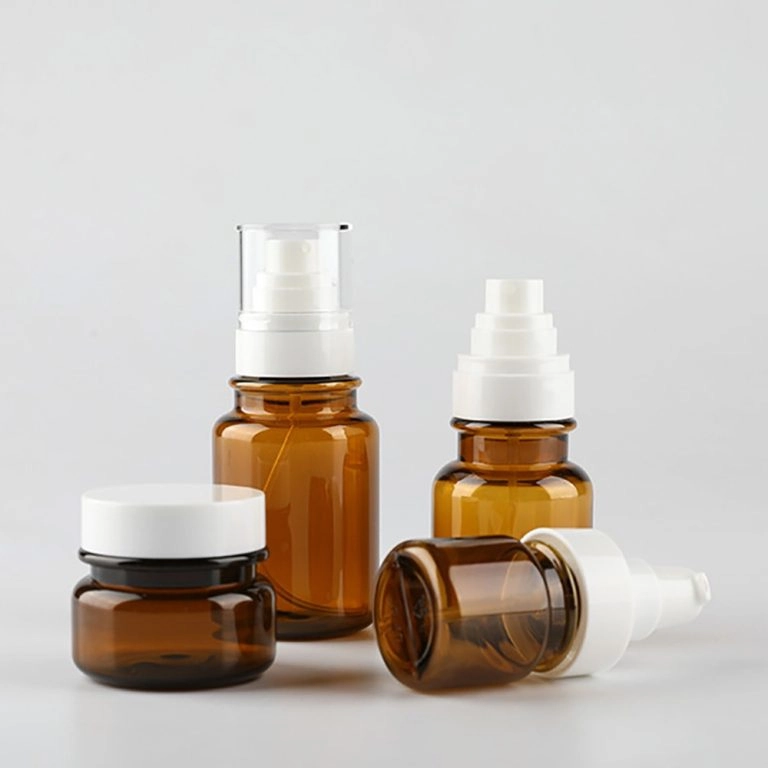
Jaunce industrial’s 40 ml, 80 ml, and 120 ml lotion and spray bottle range is available with spray-pump and lotion-pump options. The product page describes the PP spray pump as producing a fine, uniform output for liquid products such as toner. Custom colors and surface finishes are also available. Final suitability for a milky toner still depends on formula-filled testing, spray-pattern stability, clogging checks, and leakage evaluation.
| Dispensing system | Typical use | Main approval checks |
| Flow reducer | Very fluid toner applied by hand or with a cotton pad | Opening size, residue, plug fit, leakage |
| Low-output treatment pump | Measured-dose milky toner or skin essence | Output, priming, recovery, dip-tube fit |
| Fine-mist sprayer | Spray-compatible, low-viscosity milky toner | Spray pattern, output consistency, clogging, dripping, leakage |
Select Bottle Materials and Closure Components
Glass Bottles for Premium Positioning
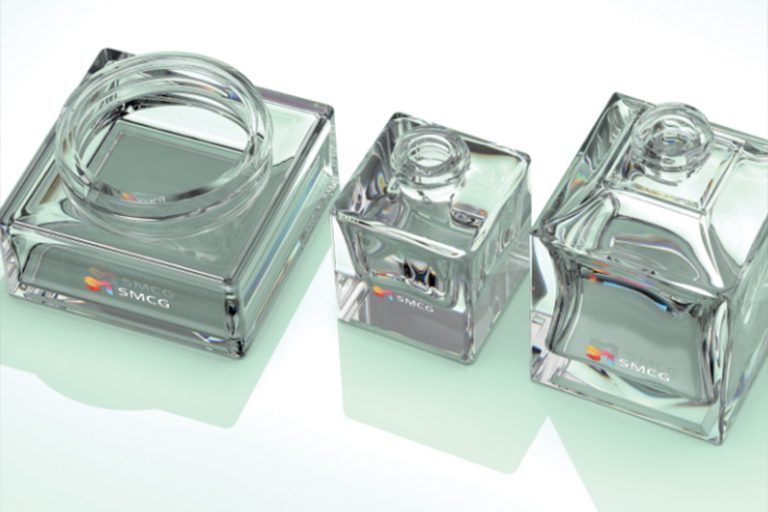
Vaso provides weight, clarity, and a substantial in-hand feel. It can support premium skincare positioning and decorative treatments such as coating, silk-screen printing, frosting, and hot stamping.
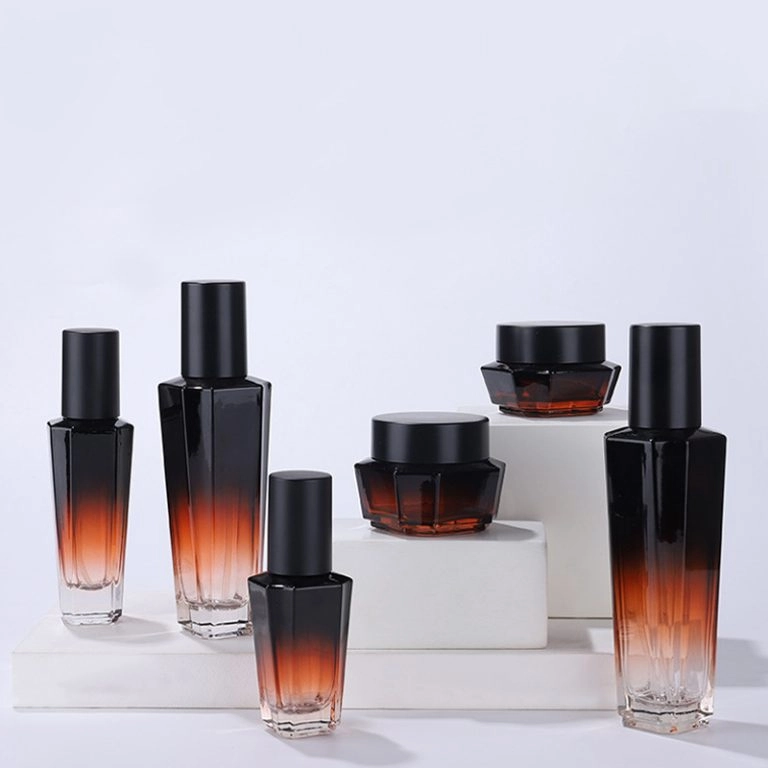
A listed Jaunce industrial skincare glass bottle set includes 30 ml, 50 ml, 100 ml, and 120 ml bottle formats intended for products such as toners, lotions, creams, and serums. The page lists glass bottles, PP outer caps, customizable colors, and several artwork treatments.
Glass also brings practical trade-offs. Buyers need to consider:
- Shipping weight
- Breakage protection
- Carton dividers
- Pallet configuration
- E-commerce handling
- Filling-line stability
One bottle may look attractive on a retail shelf but become expensive when protective packing and international freight are added.
PET Bottles for Lightweight Distribution
PET is often considered when a brand wants lower shipping weight, clear product visibility, and easier high-volume handling. It can also work with several closure styles, depending on the bottle neck and application.
Material selection should not be based on a simple rule that glass is premium and plastic is economical. Distribution channel, product capacity, decoration, filling conditions, and landed cost all matter.
Brands comparing the two options can use Jaunce industrial’s guide to Glass vs PET Cosmetic Bottles as a supporting resource. It examines material choice from the perspective of logistics, closures, product positioning, and commercial purchasing.
PP Closures, Plugs, and Pump Components
PP is used in many cosmetic closures and dispensing components. However, the material name alone does not confirm compatibility.
The bottle, cap, inner plug, gasket, dip tube, pump channel, and actuator need to work as one system. Buyers should check thread engagement, seal compression, plug retention, and closure torque using the components intended for the production order.
Changing only one part—such as moving to a different cap supplier—may alter fit and leakage performance.
Build a More Accurate Request for Quotation
Compare Stock Packaging with Custom Development
Stock molds usually reduce development time and initial tooling cost. A brand can still create a distinct appearance through custom color, printing, coating, frosting, or hot stamping.
Custom mold development gives more control over shape and brand recognition, but it adds stages:
- Design and drawing review
- Tooling quotation
- Desarrollo de moldes
- Prototype or sample approval
- Decoration testing
- Pilot production
- Commercial production approval
For a first launch, a stock package with custom decoration may be the more practical route. A custom mold becomes easier to justify when projected order volume and long-term product plans support the investment.
Confirm MOQ by Component
The bottle, closure, pump, custom color, and decoration process may have different minimum order quantities. A quotation for wholesale cosmetic bottles should separate these requirements rather than presenting only one headline MOQ.
For example, one Jaunce industrial glass bottle product page lists an MOQ of 5,000 pieces and a 45-day lead time after receipt of deposit. Those figures apply to that listed product and should not be treated as standard terms for every bottle or customization project.
Buyers should confirm:
- Bottle MOQ
- Closure or pump MOQ
- Custom color MOQ
- Printing and coating minimums
- Sample charges
- Tooling charges
- Spare-component allowance
- Export-packing method
- Production lead time
- Quotation terms
A low bottle price may not represent the final packaging cost once pumps, decoration setup, testing, and export packing are included.
For a broader sourcing review, the Jaunce industrial cosmetic packaging supplier checklist covers compatibility, customization, manufacturing capacity, MOQ, quality control, and supplier evaluation.
Test the Complete Package Before Bulk Production
Formula Compatibility and Dispensing Tests
The selected bottle should be filled with the finished formula and assembled with the intended production components.
Review the formula for changes in:
- Appearance
- Odor
- Separation
- Flow
- Residue
- Dispensing consistency
Inspect the package for swelling, stress cracking, staining, seal damage, and decoration failure.
For pumps and sprayers, record priming behavior, output consistency, nozzle dripping, spray pattern, clogging after storage, and the amount of product left near the bottom.
A pump that works once during sample review has not proved that it is ready for bulk production.
Leakage and Transport Checks
Filled samples should be stored upright, inverted, and on their sides. The bottle neck, cap, plug, pump lock, and closure fit should be inspected after each condition.
Testing should also reflect the intended distribution route. A retail shipment on pallets faces different handling from individual e-commerce parcels. Carton size, dividers, bottle spacing, and vibration can affect the finished package.
A bottle may remain dry when tested alone but develop residue when components rub, move, or loosen inside an oversized carton.
Filling-Line Pilot Run
Before approving a large order of wholesale cosmetic bottles, test the package on the intended filling and capping line.
Check:
- Bottle stability on the conveyor
- Fill accuracy
- Headspace
- Neck alignment
- Cap feeding
- Closure torque
- Label placement
- Practical line speed
When a contract filler is involved, the brand, filler, and cosmetic packaging supplier should use the same technical drawing and approved sample.
Jaunce industrial’s article on its pre-production QC system provides further detail on material validation, pump testing, leakage checks, tooling approval, and pilot-production controls.
Why Jaunce industrial Fits Milky Toner Projects
Jaunce industrial supplies glass and plastic envases para productos de cuidado de la piel, including bottle, pump, spray, and closure configurations that can be evaluated for toner projects.
Rather than selecting a bottle from appearance alone, buyers can compare material, capacity, dispensing method, decoration, MOQ, and filling requirements within one project brief. OEM and ODM support can also cover stock-package customization or new mold development, depending on the project.
For milky toner packaging, the most useful supplier discussion is usually practical:
- How fluid is the formula?
- How should the customer apply it?
- What dose should each actuation release?
- Will the product ship through retail cartons or parcel networks?
- Which parts require custom color or decoration?
- What quantity is needed for the first production run?
Clear answers help narrow the options before samples are prepared.
Conclusión
Reliable milky toner envases para productos de cuidado de la piel depends on the interaction between the formula, bottle, dispenser, closure, filling equipment, and transport plan. A package that looks good but drips, clogs, or slows production is not ready for market.
Jaunce industrial can support bottle selection, sample review, decoration, component matching, and bulk-project planning. To move your project forward, contact Jaunce industrial for matched samples and a project-specific quotation with your formula type, viscosity range, fill volume, preferred dispenser, target quantity, destination market, and launch schedule.
PREGUNTAS FRECUENTES
Q1: Which dispensing system is best for a milky toner?
R: A very fluid formula may work with a flow reducer, while an essence-style milky toner may suit a low-output treatment pump. A fine-mist sprayer should only be selected after the finished formula produces a stable spray without clogging or dripping.
Q2: Can a milky toner be filled in a fine-mist spray bottle?
R: Yes, but commercial suitability depends on viscosity, suspended ingredients, pump geometry, dip-tube design, and storage behavior. Testing with water cannot replace testing with the finished formula.
Q3: What information does a cosmetic packaging supplier need for an accurate quotation?
R: Buyers should provide the formula type, viscosity, fill volume, bottle material, preferred closure, order quantity, decoration, destination market, filling method, and delivery schedule. A formula sample can make component recommendations more accurate.
Q4: What tests should be completed before placing a bulk packaging order?
R: The project should include formula compatibility, dispensing consistency, leakage, closure torque, transport, decoration resistance, and filling-line checks. Testing should use the same component combination intended for commercial production.
Q5: How do stock molds and custom packaging affect MOQ and lead time?
R: Stock molds generally reduce tooling cost and development time. Custom shapes, special colors, and multi-stage decoration may require higher minimums, additional samples, and longer approval cycles. Exact terms depend on the selected bottle, closure, and decoration process.