

A cosmetic label can fail long before the bottle reaches a filling line. The problem may be a missing statement, an undersized ingredient declaration, an incorrect panel, or artwork that leaves no room for legally required copy. For U.S. launches, packaging design should therefore begin with the label content and available display area, not with decoration alone.
This guide translates the FDA’s summary of cosmetic labeling requirements into practical packaging-artwork questions for beauty brands. It is general packaging planning information, not legal advice. The responsible brand, manufacturer, packer, or distributor should confirm current federal and state requirements with qualified regulatory counsel before printing or production.
The Fast Answer: Reserve the Right Information on the Right Panel
For a conventional cosmetic, the principal display panel generally carries the product identity and an accurate net quantity statement. An information panel carries required business information, the ingredient declaration, material facts, and applicable warnings. Imported articles also need country-of-origin marking under the Tariff Act. The exact placement, prominence, type size, and wording depend on the package and product, so a generic label template is not a final compliance check.
First Confirm Whether the Product Is Only a Cosmetic
Classification comes before artwork. A product intended only to cleanse, beautify, promote attractiveness, or alter appearance may be a cosmetic. If claims say that it treats or prevents disease or affects the body’s structure or function, it may also be a drug. Acne treatment, sun protection, antiperspirant, and antidandruff claims are common examples that can change the regulatory framework.
Principal Display Panel: Identity and Net Quantity
The principal display panel, or PDP, is the part of the label most likely to be displayed or examined under customary retail conditions. It must identify the product by name or by a descriptive name or illustration that communicates its nature or use. A creative collection name alone may not tell the shopper whether the product is a facial cleanser, body lotion, serum, or another cosmetic.
The PDP also needs an accurate net quantity statement. FDA’s summary says it must be distinct, generally parallel to the package base, and placed in the bottom area of the panel. Solids, semisolids, viscous cosmetics, and liquids follow different U.S. customary expressions, and metric information may be added. The minimum type size depends on the PDP area, so calculate that area from the production dieline rather than estimating from a rendering.
Information Panel: Business, Ingredients, and Warnings
Name and place of business
The label must state the name and place of business of the firm marketing the product. FDA’s summary describes the address elements and says that when the named distributor is not the manufacturer or packer, wording such as ‘Manufactured for’ or ‘Distributed by’ is needed. Imported articles must state the English name of the country of origin. Confirm the exact business wording and address treatment with regulatory counsel.
Ingredient declaration
Retail cosmetics for personal care generally need an ingredient declaration. Ingredients are ordinarily listed in descending order of predominance, with specified flexibility for color additives and ingredients at one percent or less. Use names accepted under the applicable U.S. rules; do not assume an international artwork file can be reused unchanged.
The declaration must be conspicuous and likely to be read at purchase. FDA states that ingredient lettering is generally at least 1/16 inch high, or at least 1/32 inch when the total package surface available for labeling is less than 12 square inches. Small packages may have specific alternatives, but a designer should not compress the list before regulatory review.
Warnings and material facts
Some products require warning or caution statements, and information needed to prevent misleading use must be disclosed. Warning rules vary by product category. Ask regulatory staff to provide approved text and prominence instructions; the artwork team should not paraphrase mandatory language to make it fit.
Immediate Container and Outer Carton Are Not Interchangeable
FDA distinguishes requirements arising under the FD&C Act from certain Fair Packaging and Labeling Act requirements. Its summary explains that statements required under the FD&C Act must appear on inside as well as outside containers or wrappers, while ingredient labeling and the net quantity statement under the FP&L Act apply to the outer-container label. The correct treatment depends on the pack configuration and rule involved.
MoCRA Adds a Current-Law Review to the Label Master
The Modernization of Cosmetics Regulation Act of 2022 expanded FDA’s cosmetics authority. FDA defines the responsible person as the manufacturer, packer, or distributor whose name appears on the label, and that person has obligations that include serious-adverse-event reporting, product listing, and safety substantiation. Brands should have counsel confirm the current label contact information and adverse-event communication route before approving artwork.
Do not print ‘FDA approved’ on a cosmetic label merely because a facility is registered or a product is listed. These administrative steps are not cosmetic premarket approval. Use FDA’s cosmetics-labeling hub and current regulations as starting points, then verify product-specific and state requirements.
Turn the Rules Into a Packaging Artwork Workflow
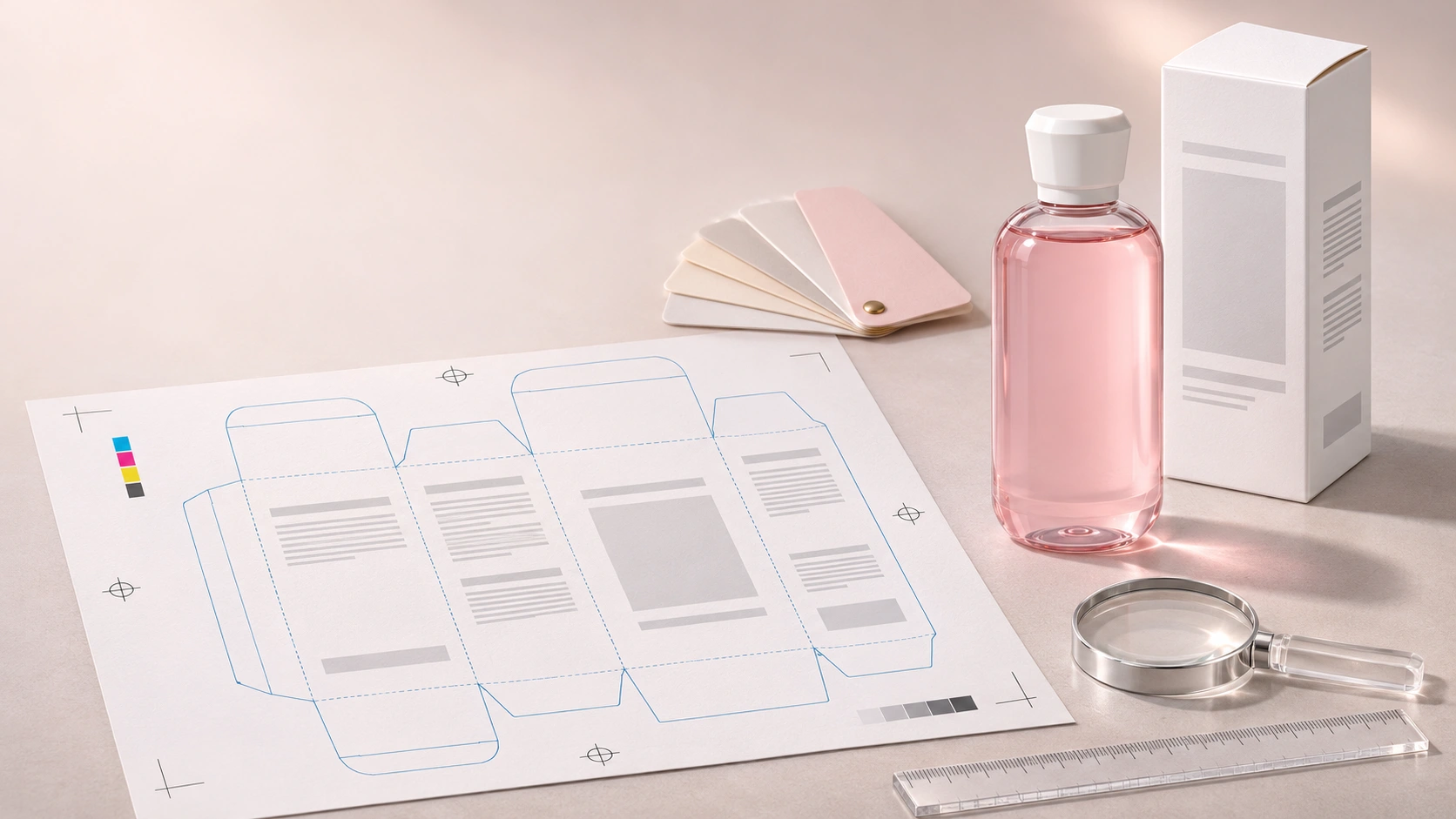
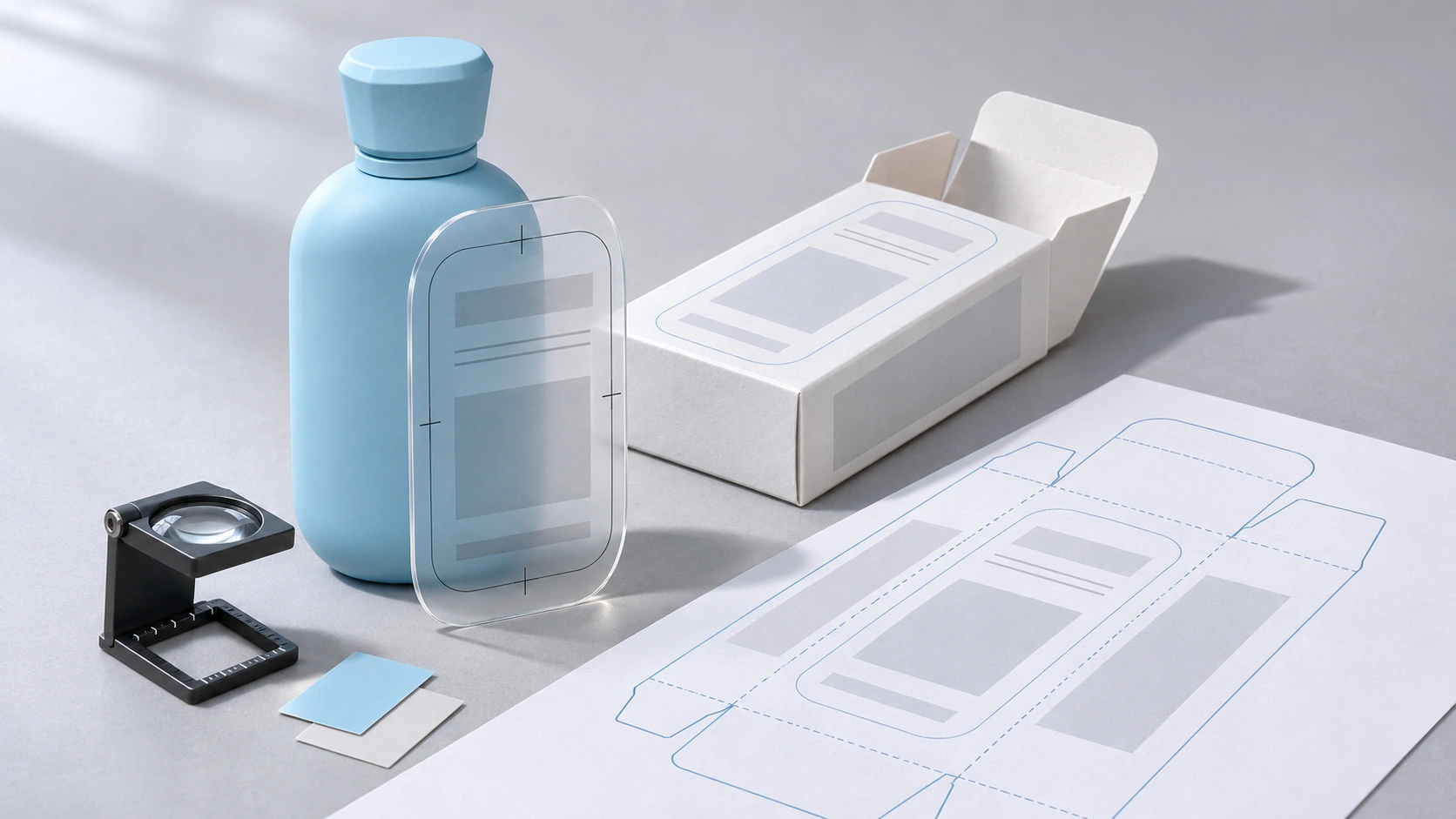
The most reliable process connects regulatory copy to the physical package before decoration tooling is released. Start with production-intent plastic cosmetic bottle options or other selected formats, obtain accurate drawings, and map the PDP and information panels at actual size. Jaunce industrial’s project support can help confirm material, component structure, decoration, samples, and artwork inputs, while the brand retains responsibility for legal content.
- Freeze classification and claims. Approve the intended use, warnings, and markets.
- Use supplier drawings to calculate panel areas and mark interrupted surfaces.
- Control identity, net quantity, ingredients, business details, origin, warnings, directions, and optional copy in one deck.
- Check 100 percent artwork for type height, contrast, direction, seams, and print tolerances.
- Confirm legibility on a physical decorated sample.
- Archive signed artwork, the dieline, copy deck, formula version, and approvals.
What a Packaging Supplier Can and Cannot Confirm
A supplier can provide drawings, printable-area guidance, decoration tolerances, component specifications, samples, and production proofs. Through an OEM/ODM packaging program, the supplier may also coordinate molds, colors, printing, coating, hot stamping, labeling, and assembled-pack samples. Those services help the approved artwork fit the package.
The brand’s regulatory reviewer remains responsible for classification, ingredient names, claims, warnings, state law, and legal sufficiency. If print space forces any change, send the revised artwork back for approval.
Common Artwork Errors to Catch Before Printing
- Using a brand or collection name without a clear statement of product identity.
- Placing net quantity too high on the PDP, rotating it away from the package base, or sizing it from a screen mockup.
- Reducing ingredient text below the applicable minimum to fit a small label.
- Omitting distributor wording, country of origin, a required warning, or information needed for safe use.
Conclusion
FDA cosmetic labeling requirements are easier to manage when artwork begins with classification, panel allocation, and actual package dimensions. Reserve the PDP for identity and net quantity, build the information panel around business details, ingredients, warnings, and material facts, and review the immediate container and outer carton as a connected system. Add a current MoCRA and state-law review before print approval.
Jaunce industrial can support drawings, decoration review, molds, samples, and production-intent proofs after the brand supplies approved legal copy. To discuss the package format, capacity, decoration, quantity, and target market, contacter Jaunce industriel before artwork is locked.
Questions fréquentes
Does FDA approve cosmetic labels before sale?
Generally, FDA does not pre-approve cosmetic products or their labeling before marketing. The responsible company must ensure that the product and labeling comply with applicable law.
What belongs on the principal display panel?
For a conventional cosmetic, the PDP generally needs a clear product identity and an accurate net quantity statement. Placement, wording, and type size must be checked against the current rule and package dimensions.
Can the ingredient list appear only on the carton?
The answer depends on the pack configuration and applicable provision. FDA permits ingredient declarations on an information panel of the package and provides special options for certain small packages. Obtain product-specific regulatory review.
Is an expiration date required on U.S. cosmetic labels?
FDA states that current U.S. law generally does not require cosmetic manufacturers to print expiration dates, but firms remain responsible for product safety. Other product categories, claims, retailers, or markets may impose different needs.