

In global cosmetic supply chains, packaging failure is rarely a production issue—it is a validation issue.
Most defects that appear during mass production originate from earlier stages such as tooling approval, material selection, or pre-production sampling. Once production scales, correction cost increases exponentially, especially in OEM/ODM manufacturing environments.
For manufacturers such as 産業用ジャウンス, pre-production quality control is positioned as a formal engineering gate aligned with international inspection methodologies, rather than a post-production inspection activity.
Modern cosmetic packaging quality control systems are therefore designed to prevent risk before scale, not detect it after scale.
Industry Standard Framework for Cosmetic Packaging QC
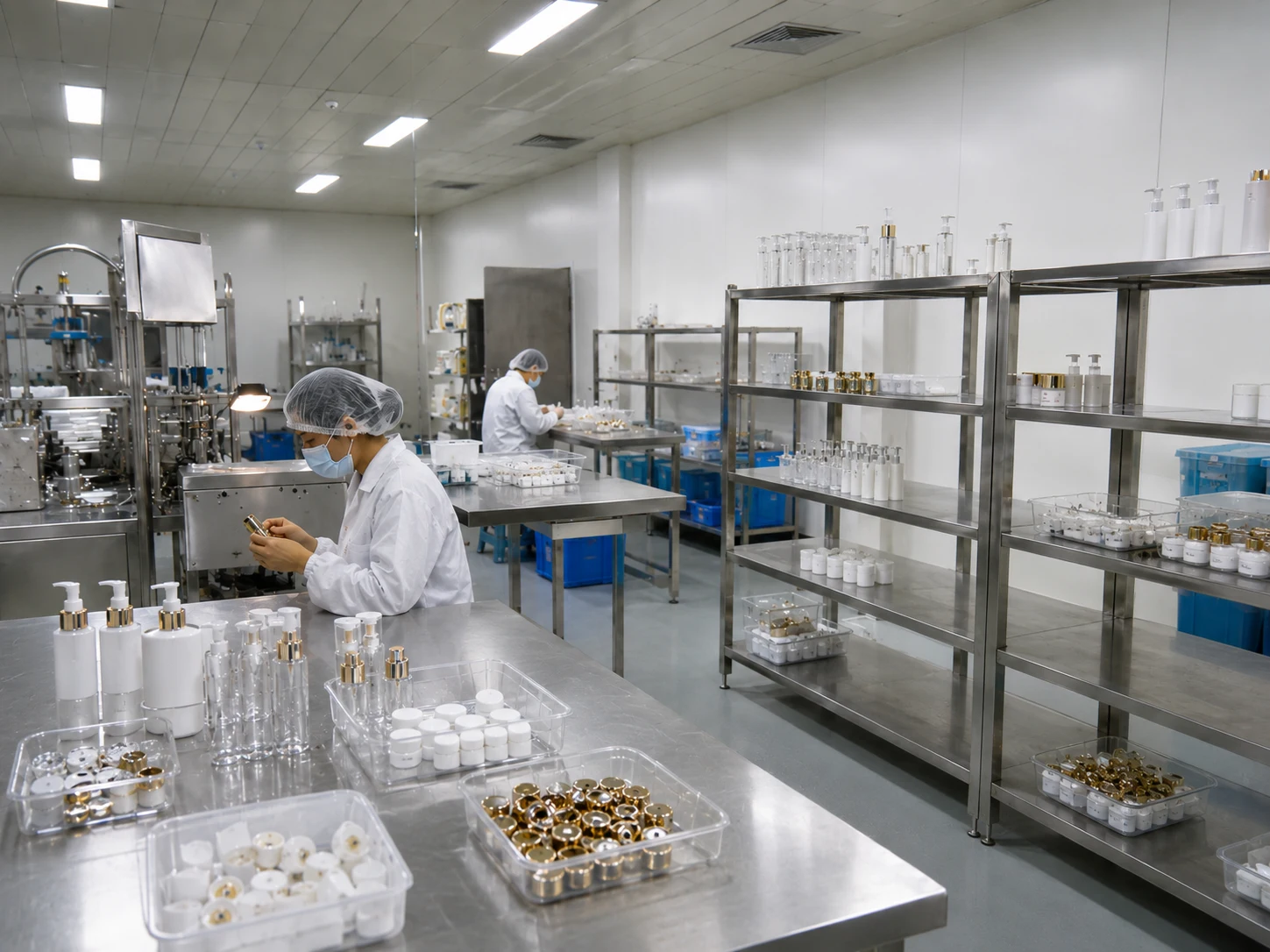
Pre-production QC is structured based on internationally recognized inspection and testing frameworks:
- ISO 2859-1: Sampling procedures for inspection by attributes (AQL system)
- ASTM D5276: Standard practice for drop test evaluation of packaging
- ISO 8317: Packaging safety and closure integrity reference standard (where applicable)
- Internal OEM engineering validation protocols (tooling + pilot production stage)
These standards are not used in isolation—they are integrated into a multi-stage validation system covering material, structure, function, and visual performance.
Engineering-Based Material Validation System
Material validation is the first control gate before any functional testing begins.
Material Behavior Under Chemical Exposure
Cosmetic packaging materials are evaluated under real formulation conditions, not theoretical compatibility.
Common materials include:
- PET (transparent bottle systems)
- PP (pump and closure systems)
- Acrylic (premium skincare jars)
- Glass (high-end cosmetic containers)
- PCR plastics (sustainable packaging systems)
Key engineering risks:
- stress cracking under alcohol or active ingredient exposure
- polymer deformation under thermal cycling
- UV-induced discoloration or structural fatigue
- migration effects in long-term storage conditions
Material validation failure at this stage is one of the primary causes of downstream leakage and deformation issues in OEM production.
Structural Integrity & Tooling Validation Stage
Structural validation confirms whether design geometry performs correctly under assembly and torque conditions.
Mechanical Fit & Torque Stability
Core validation parameters include:
- thread engagement tolerance between bottle and closure
- pump head torque consistency (mechanical locking force stability)
- seal compression uniformity across production batches
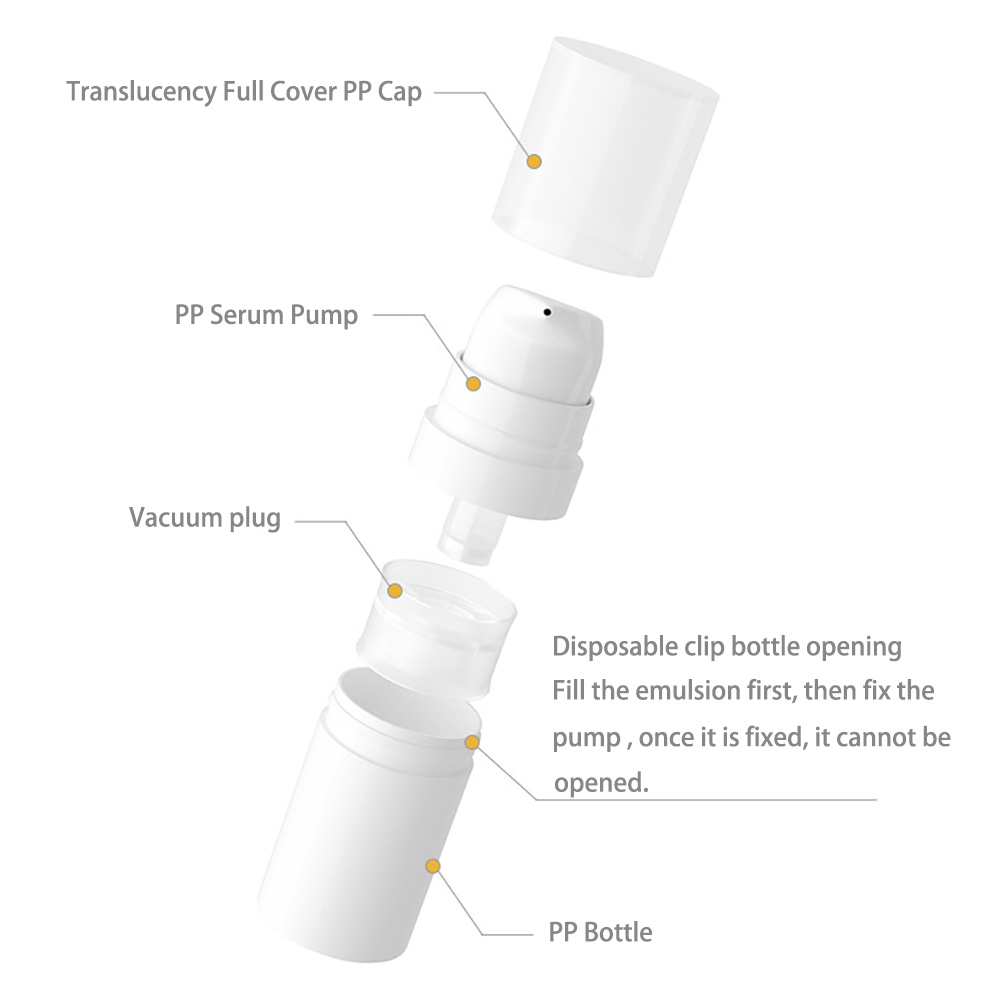
- airless system pressure retention performance
Even minor deviations at tooling level can lead to cumulative failure in mass production, especially in high-viscosity skincare applications.
Tooling Freeze Principle
In professional OEM manufacturing workflows, tooling is only frozen after:
- pilot sample approval
- dimensional verification
- assembly cycle validation
This stage prevents irreversible scaling of structural defects.
Functional Performance Validation System
Functional testing simulates real-world usage and logistics conditions.
Leak Testing & Airtight System Validation
Leakage is classified as a critical defect in cosmetic packaging QC systems.
Testing methodologies include:
- inverted position leakage test (24–48 hours observation period)
- vacuum pressure integrity testing for airless systems
- thermal cycling simulation (hot/cold transition exposure)
Engineering root causes of leakage:
- inconsistent sealing torque distribution
- cap geometry misalignment at micron-level tolerance
- material elasticity variation under temperature change
Leakage is typically a system-level failure, not a single-point defect.
Pump Performance & Dispensing Stability Testing
Pump systems are evaluated as mechanical dosing devices rather than simple dispensing tools.
Key performance indicators include:
- output volume consistency per stroke (ml variance control)
- priming efficiency during first activation cycle
- spring return stability after repeated compression cycles
- long-cycle fatigue resistance (typically 200–500 cycles testing range)
In skincare applications, dosage inconsistency is classified as functional failure due to direct impact on product usability.
Drop & Logistics Simulation Testing
Packaging must withstand transportation stress conditions, not only laboratory handling.
Standard testing conditions:
- drop height: 1.0–1.5 meters
- multi-angle impact (corner, edge, face orientations)
- repeated cycle simulation testing
- post-impact leakage and deformation inspection
In global logistics, vibration exposure during sea freight often produces higher cumulative stress than single-impact events, making dynamic testing essential.
Visual Quality & Branding Integrity Control System
Visual consistency directly influences brand perception in retail environments.
Color Tolerance Engineering Control
Color management systems include:
- Pantone standard matching systems
- controlled lighting evaluation (D65 standardized conditions)
- batch-to-batch color deviation monitoring
- coating thickness uniformity control
Even minimal deviation becomes visually amplified under retail lighting conditions, particularly for premium skincare brands.
Printing Adhesion & Surface Durability Validation
Brand identity elements must survive operational handling environments.
Standard validation methods include:
- 3M adhesive tape pull testing
- alcohol abrasion resistance testing
- mechanical scratch resistance simulation
- UV exposure stability evaluation
These tests simulate warehouse handling friction, transport abrasion, and retail shelf interaction.
Failure Mode Analysis in Cosmetic Packaging Production
Across OEM cosmetic packaging manufacturing systems, recurring failure patterns include:
- pump spring fatigue leading to inconsistent dispensing force
- thread misalignment resulting in micro-leakage
- coating adhesion failure on matte or soft-touch surfaces
- airless chamber pressure loss after repeated actuation cycles
- batch-to-batch color deviation during scaling transition
These failures typically emerge during production scaling rather than initial sampling validation.
OEM Manufacturing QC Implementation Model
In structured OEM environments such as 産業用ジャウンス, pre-production QC is implemented as a gated engineering system.
The validation process typically includes:
- engineering design review prior to tooling approval
- pilot production sampling under controlled batch conditions
- multi-condition functional testing (leak, pump, drop, torque)
- visual consistency verification across pilot batches
- final QC approval prior to mass production release
This system reduces production variability and improves long-term consistency in large-scale cosmetic packaging programs.
Commercial Impact of QC in Supplier Selection Decisions
For international procurement teams, QC capability is now a primary supplier selection criterion.
It directly impacts:
- supplier qualification approval
- production risk assessment
- product launch reliability
- long-term sourcing partnerships
In many OEM sourcing decisions, price is no longer the primary differentiator—predictable quality stability is.
結論
Pre-production QC in cosmetic packaging manufacturing functions as an engineering control system rather than a standalone inspection step.
Leakage prevention, pump performance validation, structural integrity control, and visual consistency testing collectively define production reliability before scaling begins.
For global brands developing skincare and cosmetic product lines, partnering with a structured OEM manufacturer such as Jaunce industrial provides measurable risk reduction during early-stage production planning.
In modern cosmetic packaging supply chains, quality is no longer verified at the end of production—it is engineered at the beginning of it.
よくあるご質問
Q1: What is the role of pre-production QC in cosmetic packaging manufacturing?
A: It serves as a controlled engineering validation stage to identify structural, material, and functional risks before mass production begins.
Q2: Which standards are commonly used in cosmetic packaging QC systems?
A: ISO 2859-1 (AQL sampling), ASTM D5276 (drop testing principles), and ISO 8317 (closure integrity reference) are widely used frameworks.
Q3: Why is leak testing considered a critical control point?
A: Because leakage typically results from system-level sealing failures that can lead to product loss and distribution rejection.
Q4: How is pump performance validated in OEM cosmetic packaging?
A: Through multi-cycle dispensing tests measuring output consistency, priming efficiency, and mechanical durability over repeated use.
Q5: Why is pre-production QC important for supplier selection?
A: It directly reflects manufacturing capability, production stability, and long-term risk control in large-scale cosmetic packaging sourcing.