

Glass vs PET Cosmetic Bottles: Best Packaging for Skincare Brands
Decision-making regarding the use of either glass cosmetic bottles or PET cosmetic bottles normally occurs relatively early within the skincare project. On the surface, it seems to be just about materials, but in practice, it can end up involving transport costs, line preparation, positioning of the product, as well as the perception that will come at the store shelves eventually.
The use of glass and PET in skin care products’ packaging does not have a general answer. Some manufacturers still prefer to use glass for aesthetic value and product stability. In contrast, other manufacturers opt for PET because it has greater endurance during transportation and maintains lower costs.
Industriële Jaunce works with both glass and plastic cosmetic packaging lines, including skincare bottles, lotion bottles, spray bottles, cream jars, and PET cosmetic bottles. It usually comes down to what works better for a specific formula and market.
Why This Choice Matters Before Production Starts
Packaging decisions made too late tend to create friction. A formula may already be stable, labels may be designed, but then the bottle turns out too heavy for export, or too fragile for e-commerce distribution. At that point, adjustments are not only expensive but also slow down launch schedules.
In actual B2B purchasing, material choice affects a few practical things:
- Total landed cost, not just unit price
- Breakage rate during transport
- Compatibility with pumps, sprayers, and closures
- Storage and pallet efficiency
- Shelf positioning and brand tier perception
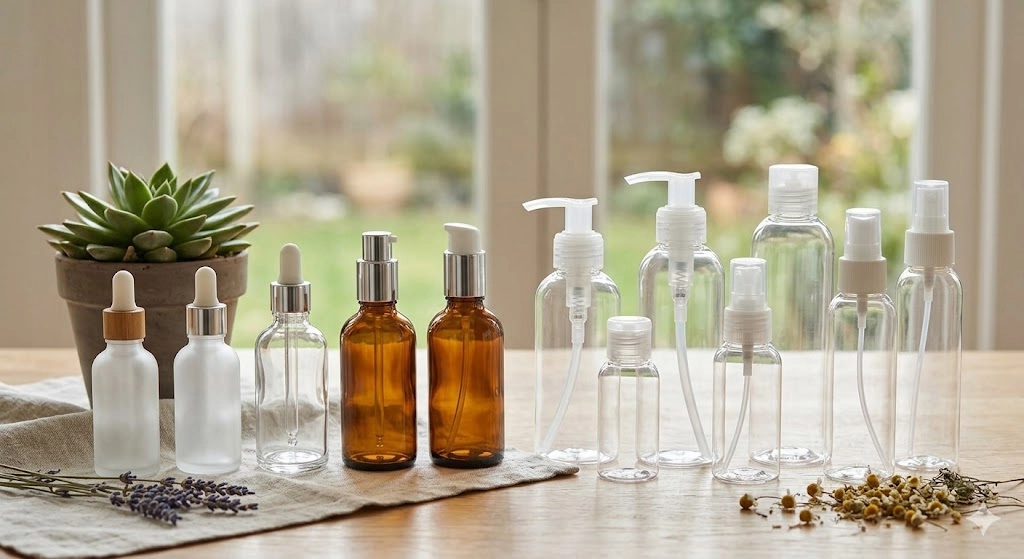
Glass and PET sit on different sides of these trade-offs. Glass adds weight and structure. PET reduces risk in logistics and works better for high-volume handling.
Where Glass Cosmetic Bottles Still Have an Advantage
Glass is still widely used in skincare packaging, especially in segments where visual presence matters more than transport efficiency. There is a reason why many serum or essential oil products still stay in glass even when plastic options exist.
Serums, facial oils and premium formulas
Glass cosmetic bottles are commonly selected for serums, facial oils, ampoules, and higher-value skincare items. These products are usually sold in smaller volumes, where packaging cost does not dominate the total product price.
One practical reason is stability. Glass does not easily react with most cosmetic ingredients. It also handles light-sensitive formulas better when paired with amber or frosted finishes. In some cases, brands choose glass simply because the product inside needs a more neutral container.
There is also a practical side. Droppers and pump systems tend to sit more firmly on glass neck finishes, especially in controlled production environments.
Strong shelf presence for beauty retail
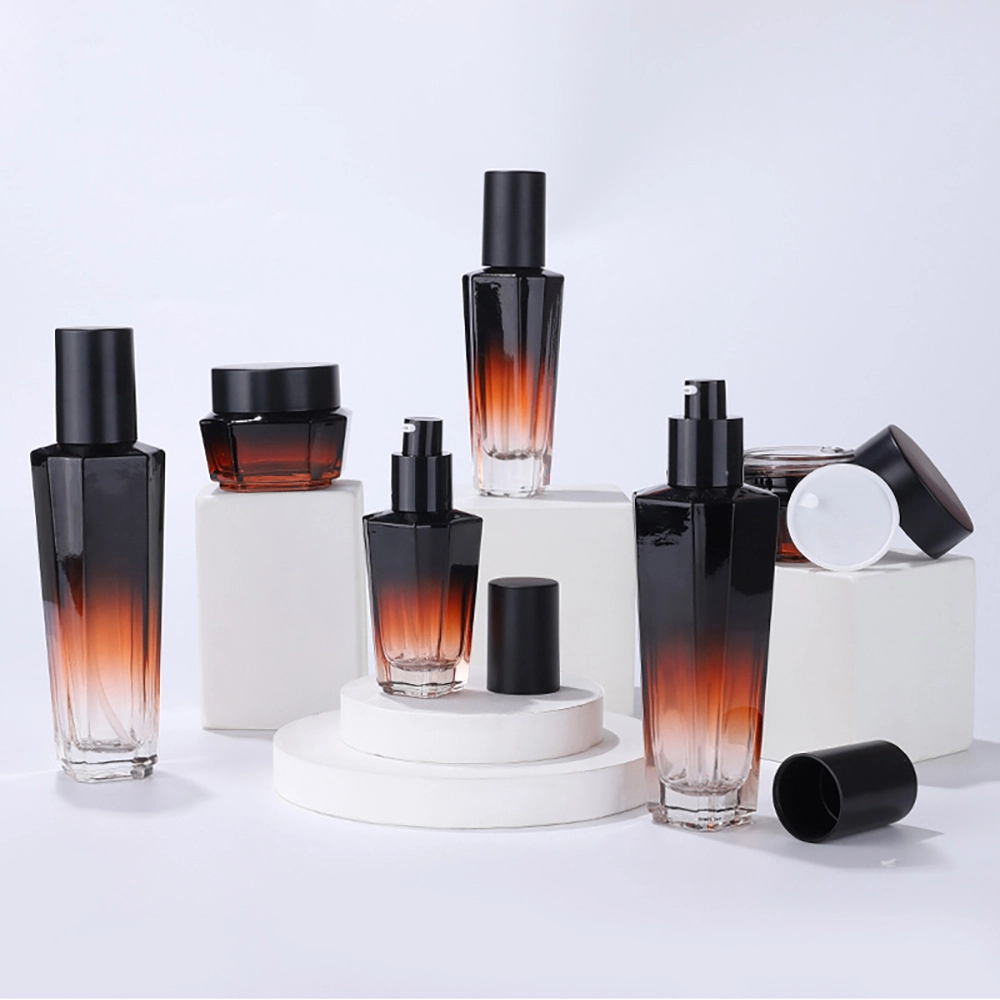
On retail shelves, glass behaves differently from plastic. It reflects light, feels heavier in hand, and usually gives a more “finished” impression even before reading the label.
That does not mean PET looks cheap. It just reacts differently. Glass tends to slow down the visual judgment process, which sometimes helps mid-to-high tier skincare lines.
Still, glass requires careful handling. Extra cartons, dividers, and pallet protection are often needed. In export cases, that part sometimes becomes more noticeable than the bottle itself.
Better fit for refillable or structured packaging lines
Refill systems are still evolving in skincare. Glass often appears in these concepts because the bottle body is designed to last longer while only the inner content is replaced.
In practice, refill success depends less on material “story” and more on how easy the refill process is. If the system is complicated, even a glass bottle does not improve customer retention.
Where PET Cosmetic Bottles Make More Sense
PET has a different role in skincare packaging. It is not positioned around luxury perception but around usage stability and logistics simplicity. For many daily-use products, that trade-off works better.
Lightweight bottles for lotion, toner and daily care
Cosmetic PET bottles are commonly used for toners, lotions, cleansers, shampoos, and body care cosmetics. These sizes are large, ranging from 150ml to 500ml, where the factor of weight becomes critical.
From a practical point of view, these are the products that are handled many times, especially in bathrooms, gym facilities, or carry cases. It is easier to handle a light bottle while using it and safer while storing these bottles in cartons in large quantities.
PET also adapts well to different closure systems like flip-top caps, pump heads, and spray triggers, which are common in skincare lines with multiple SKUs.
Safer shipping for e-commerce and export orders
Breakage does not become apparent during the planning process but rather in the export logistics process. Distance brings about vibration, temperature fluctuations, and stacking pressure.
PET copes better with such challenges. Even in cases where handling the cartons may be poor, the chances of losing the products will be smaller compared to glass bottles.
This is part of why PET is preferred for international e-commerce and high-volume distribution channels.
Practical choice for bulk skincare packaging
For larger-volume skincare products, PET usually makes cost structure easier to manage. Bottles in 300ml, 500ml, or even 1000ml formats are common in this category.
Typical applications include:
- Family-size lotion bottles
- Body wash and shampoo packaging
- Salon and spa use products
- Travel and hospitality sets
At this scale, packaging efficiency often matters more than premium perception.
Glass vs PET Cosmetic Bottles in Real B2B Purchasing
In sourcing discussions, the comparison usually moves beyond material properties. It becomes a mix of cost, compatibility, logistics, and brand direction.
Cost is not only bottle price
Unit price is only one part of the equation. Glass often increases total cost through shipping weight, packing materials, and handling requirements. PET reduces these costs but may require different branding strategies to maintain visual consistency.
Formula compatibility and closure matching
Some formulations behave differently depending on container material. Oils, alcohol-based liquids, or active skincare ingredients may require simple testing before final confirmation.
Closure systems also matter. Pumps, droppers, and sprayers should match neck finish and product viscosity. This step is often underestimated but can affect filling line performance later.
Brand positioning and product segmentation
Most skincare brands do not stay in one category. A common structure is:
- Glass for hero or premium SKUs
- PET for daily-use or high-volume SKUs
This split is not about upgrading or downgrading materials. It is more about matching product role with packaging behavior.
Freight, breakage and storage impact margin
In real operations, pallet density, carton design, and warehouse stacking rules directly affect cost per unit. PET allows tighter packing and lower breakage. Glass requires more space and protection.
Over time, these small differences influence margin more than expected.
Sustainability depends on full lifecycle
Glass is often seen as “greener,” but the reality is more balanced. PET reduces transport emissions due to lighter weight. Glass offers reuse potential but increases logistics load.
Sustainability claims usually need full lifecycle context rather than single-material labeling.
How to Match Bottle Material With Product Type
A simple structure often used in actual packaging planning:
- Premium serum or facial oil → glass
- Toner, lotion, cleanser → PET
- Refillable hero product → glass
- Daily-use large volume items → PET
Some brands still combine both in one system. This is common when product lines expand and packaging needs become more segmented.
Custom Packaging Options from Jaunce industrial
Jaunce industrial produces both glass and plastic cosmetic packaging systems, covering skincare bottles, lotion bottles, spray bottles, cream jars, and PET cosmetic bottles.
Glass lines are often used for serum, fragrance, and facial care packaging, with options like frosted finish, color coating, and screen printing. PET lines focus more on lotion, toner, and daily skincare packaging with flexible capacity options.
In many projects, the key is not only selecting a bottle, but also matching pumps, sprayers, caps, and decoration methods so the full packaging system stays consistent across product lines.
Conclusie
Glass cosmetic bottles and PET cosmetic bottles solve different problems in skincare packaging. Glass is more suitable for premium positioning and smaller high-value formulas. PET works better for daily-use products, large-volume packaging, and shipping-heavy channels.
Most skincare portfolios end up using both. The decision is less about preference and more about role division inside the product line.
Jaunce industrial supports both glass and PET cosmetic packaging, helping skincare brands build flexible product lines that balance cost, logistics, and brand positioning without overcomplicating sourcing decisions. Contact Jaunce industrial to discuss suitable glass and PET cosmetic bottle options for upcoming skincare packaging projects.
Veelgestelde vragen
Q1: Which is better for skincare brands, glass or PET cosmetic bottles?
A: It really depends on the product. Glass is usually picked for serums or anything high-end. PET is more common for everyday stuff like toner or cleanser, especially in larger volumes.
Q2: Are PET cosmetic bottles suitable for facial toner and lotion?
A: Yes. PET bottles are light and easy to handle, and they work fine with pumps or spray caps.
Q3: Are glass cosmetic bottles more sustainable than PET bottles?
A: Glass is often considered more recyclable, but it is heavier to ship. PET is lighter and easier on logistics. In many packaging projects, both are used depending on the product and market needs.
Q4: Which material is safer for export shipping?
A: PET is generally safer for long-distance shipping since it is less likely to break during handling and transport.
Q5: Can one skincare brand use both glass and PET bottles?
A: Yes. Glass goes to the premium items, PET is used for daily products. It keeps the range balanced and easier to manage on cost side.