

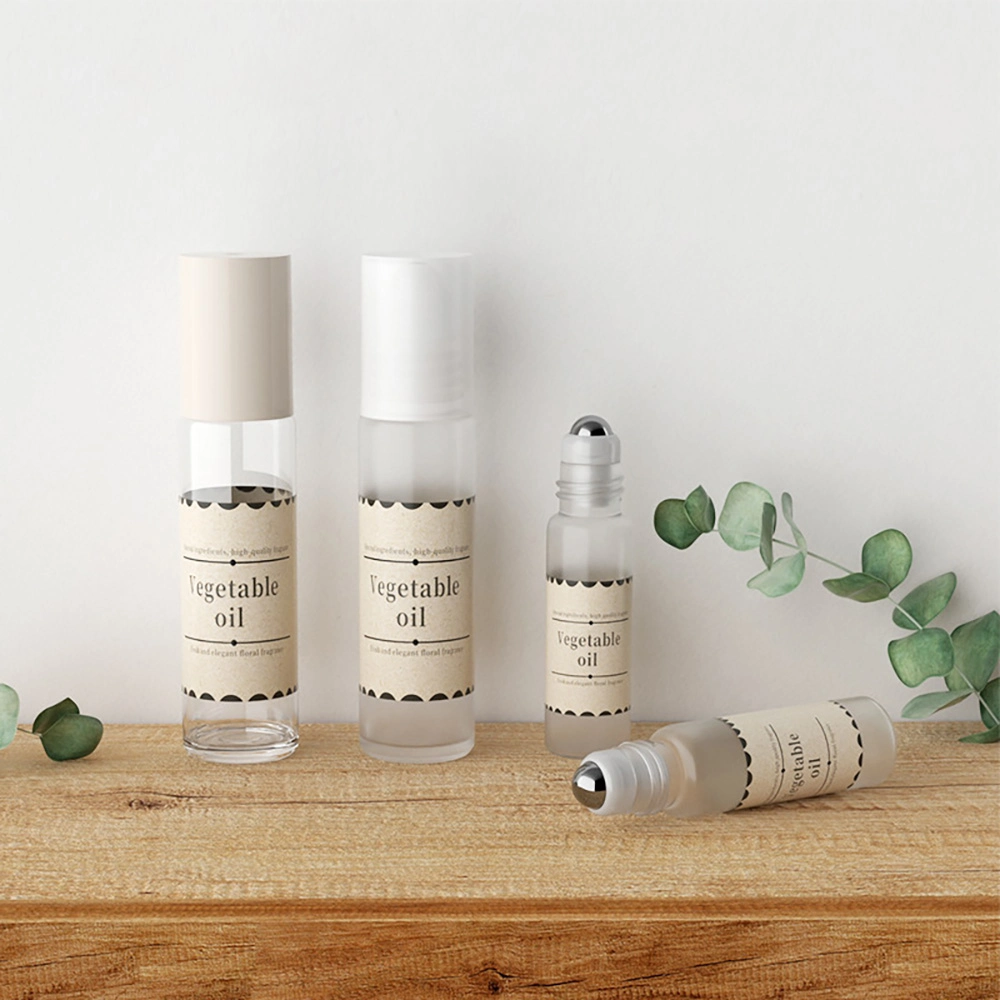
Glass roller bottles for essential oils wholesale orders should be specified as a complete package: bottle, roller insert, ball, and cap. Choose a capacity around the product’s retail role, then test the assembled pack with the actual formula before approving decoration or a bulk run. A bottle that fits the artwork but dispenses too freely, drags on skin, or seeps in transit is not ready for purchase.
This guide is for fragrance and essential-oil brands, importers, and procurement teams developing a retail roll-on, not for buyers seeking a loose bottle for home blending. The aim is to turn an attractive sample into a repeatable purchasing specification.
Define the finished roll-on before requesting a quote
Start with the product, not a generic bottle capacity. Is it a concentrated pulse-point fragrance, a diluted oil blend, or a cosmetic serum applied by rolling? State the formula type, intended application area, retail channel, and expected fill volume. Those facts determine what the insert must dispense and which compatibility checks the filling team needs to run.
For a small trial or discovery assortment, 5ml may limit the fill committed to each scent. A 10ml format can give a standalone SKU more usable volume, but it changes filled weight, display dimensions, and the number of units per shipping carton. Neither size alone establishes the correct dose. Ask for filled samples and compare the application experience with the same formula and handling conditions.
Şu essential oil bottle range is a useful starting point when a brand is still choosing between a roll-on and a dropper format. Keep those two dispensing jobs separate: a pipette transfers drops to a hand or mixing vessel, while a roller contacts the application surface. A search for an essential-oil bottle can lead to either format, so name the dispenser in the RFQ.
Check the bottle and roller as one assembly
A ball that turns smoothly in an empty sample may behave differently with a thick oil blend. A thin formula can expose a loose fit or excessive flow. Test the intended formula across several assembled units, not only the best-looking display sample. Record whether the ball starts rolling promptly, deposits a controlled film, and remains seated after repeated use.
The insert-to-neck fit matters just as much as the ball. Ask the supplier to identify the insert and cap supplied with the quoted bottle, then confirm that the same component combination will be used for the approved production sample. Do not assume that balls or inserts from another vendor are interchangeable because the nominal bottle capacity matches. Assembly dimensions and tolerances need physical confirmation.
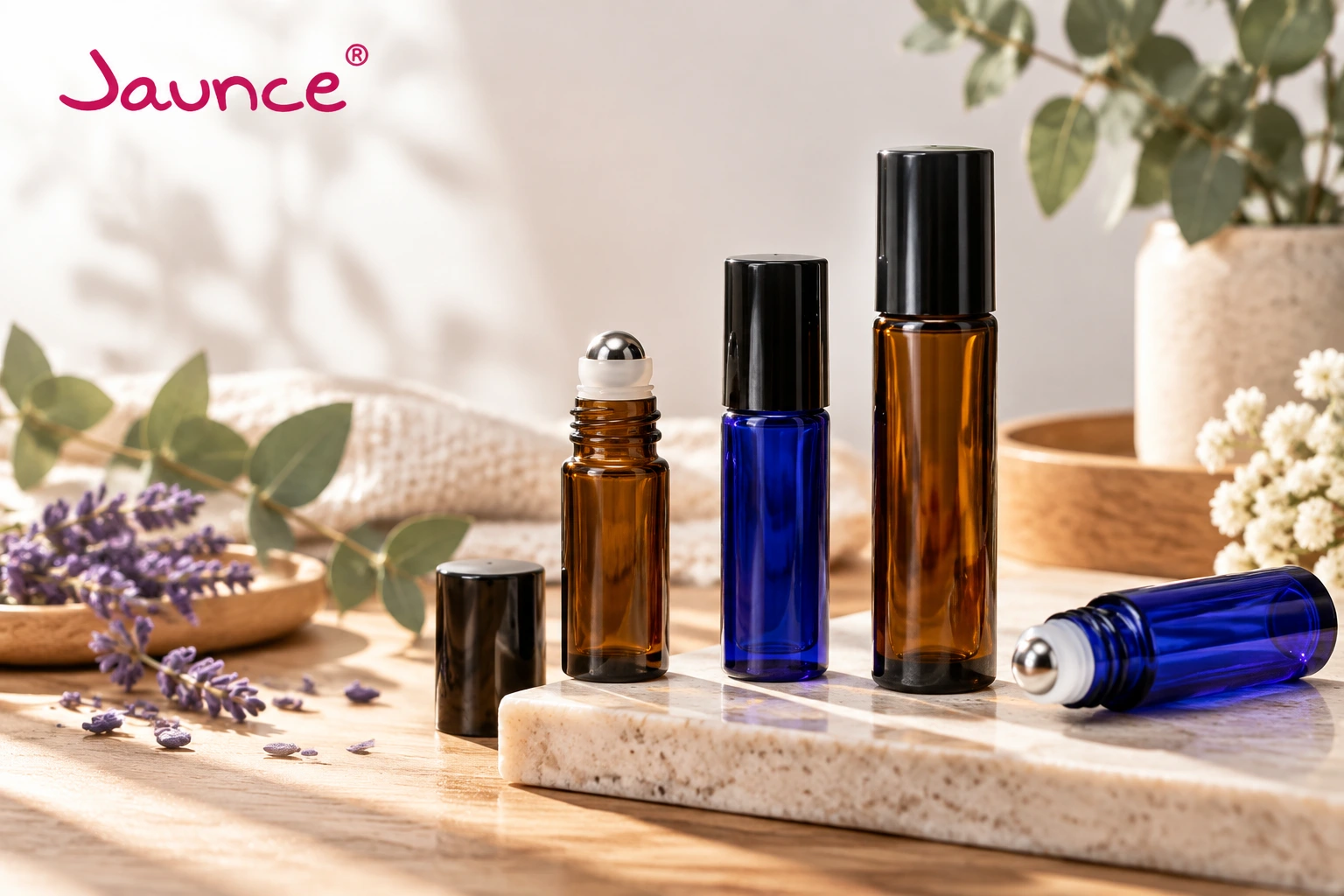
Jaunce Industrial lists a 5ml and 10ml glass roll-on bottle in blue and brown options. That pairing gives a buyer a concrete way to compare a smaller discovery SKU with a larger retail SKU while keeping the package family consistent.
Buyers can also use the two capacities to test whether one bottle family supports a planned set. The listed general MOQ is 5,000 pieces and customized orders start at 10,000 pieces for this model; ask which bottle, cap, color, and decoration combination the quotation covers. A model-level MOQ is not a promise for every configuration or product in the range.
The product information uses both roll-on and dropper terminology for its fitting. Treat the production component specification as an approval item: request a complete assembled sample and written identification of the actual roller insert, ball, and cap before confirming an order. That small check prevents the purchasing team from approving a bottle while the dispensing part remains ambiguous.
Run a practical leakage and handling review
Leakage testing needs a filled, closed pack. The formula may change how the roller wets, and closure torque, insert seating, temperature, orientation, and handling can affect the result. Agree on a test procedure with the filling partner and supplier rather than relying on an unqualified “leak-proof” label.
At minimum, check upright and inverted storage, repeated opening and closing, application after storage, and transit handling that reflects the actual sales route. Inspect the cap interior, neck, label area, and secondary pack after each check. Note both obvious liquid loss and slight residue that could soil a carton or make a cap unpleasant to open. Keep samples from more than one unit and retain the approved assembly as the reference for later orders.
Compatibility is separate from leakage. Essential-oil blends vary by ingredient and concentration; test the actual blend against every wetted component and check appearance, odor, roller movement, and closure condition over an agreed period.
Decide what customization is worth approving
Color, printing, labeling, and cartons can distinguish a roll-on line, but decoration should follow package performance approval. Jaunce Industrial’s roll-on model lists custom color, logo printing, labeling, and paper-box options subject to order requirements.
Request a physical decorated sample when color accuracy or label adhesion matters. A Pantone reference is a useful instruction, not proof that every substrate and finish will look identical.
For multi-scent programs, ask whether one bottle and closure platform can serve the planned variants. Then isolate the elements that genuinely change, such as printed artwork or carton copy.
This can simplify component control, although the economics depend on the actual decoration method and quantity per variant. Confirm the MOQ and approval sample for each variation instead of multiplying a single headline MOQ across the entire launch.
Şu OEM/ODM project route can support a conversation about custom appearance after the bottle and roller assembly are defined. Send a marked-up artwork file and a reference sample when available; the supplier can then assess what is feasible for the selected surface. Do not commit to a decoration process before evaluating print area, handling durability, and the filled pack.
Compare quotations on the same scope
An inexpensive bottle-only quote is not comparable with a price for the complete assembled pack. Ask each supplier to identify the bottle, insert, ball, cap, decoration, individual packing, and export carton in the quoted scope. Specify whether the buyer or supplier will assemble the parts and who will check the assembled samples before shipment.
Record the order quantity by size and color, the desired sample sequence, destination market, and proposed filling location. Request confirmation of production timing and commercial terms for that exact configuration; neither should be inferred from a generic product listing. For importers, also align carton labeling and component traceability with the buyer’s receiving and replenishment process.
Set a short incoming-inspection checklist before the first shipment arrives. It can cover bottle appearance, component identity, assembly, cap engagement, decoration, and packing against the approved reference. Define how many units the receiving team will inspect and how it will record a mismatch. That record gives purchasing and the supplier a common basis for resolving a variance.
A useful approval sequence is: first inspect the unfilled assembly; then fill and test the actual blend; then approve decoration and packing; finally retain a signed-off reference sample for incoming inspection. The order can move faster when the team has one agreed specification, even if the earliest visual mockup looked complete.
Sonuç
The best wholesale roller bottle is the one whose complete assembly works with the intended formula, survives the buyer’s handling checks, and can be reordered to the same approved specification. Define the retail role and size first, test ball movement and closure performance with filled samples, and approve appearance only after those decisions are stable.
Jaunce Industrial’s 5ml and 10ml glass option is a specific starting point, with customization and model-level MOQ to confirm against the chosen configuration. For a useful quotation, share the formula category, target size, quantity by variant, destination market, artwork needs, and your sample and filling plan with Jaunce Industrial’s team.
Frequently Asked Questions
Is a 5ml or 10ml roller bottle better for a new line?
Choose by the product’s sales role and filled-pack economics. A 5ml unit can suit discovery or a compact set; 10ml may suit a longer-use standalone product. Test both with the same formula, then compare application, price positioning, shipping weight, and MOQ by variant before approving a launch size.
Can the same roller insert be used for every essential-oil blend?
Do not assume so. Viscosity and ingredients can change how a blend wets and moves through the ball assembly. Ask for the exact insert and ball specification, test each materially different formula, and have the filling team confirm compatibility and application performance.
What should an importer include in a roller-bottle RFQ?
Include capacity, formula type, intended market, quantity by variant, required bottle and cap color, decoration, packing, filling location, and sample requirements. Request a quote for the complete assembly and identify the components and approval tests in writing. This makes supplier offers comparable.
Does a colored glass bottle guarantee formula stability?
No. Bottle color may be one part of a protection strategy, but stability depends on the actual formula, package components, exposure, and storage conditions. Have the formulator set the test plan and substantiate any product shelf-life or protection claim before using it in marketing.