

Makeup remover bottle packaging should be chosen from the formula, service setting, and dispensing behavior. Micellar water, bi-phase remover, cleansing oil, and remover lotion do not create the same flow, seal, or user-handling requirements. Retail packaging must work on shelf and in the consumer’s bathroom, while salon packaging must also withstand frequent handling, repeated opening, and back-bar storage.
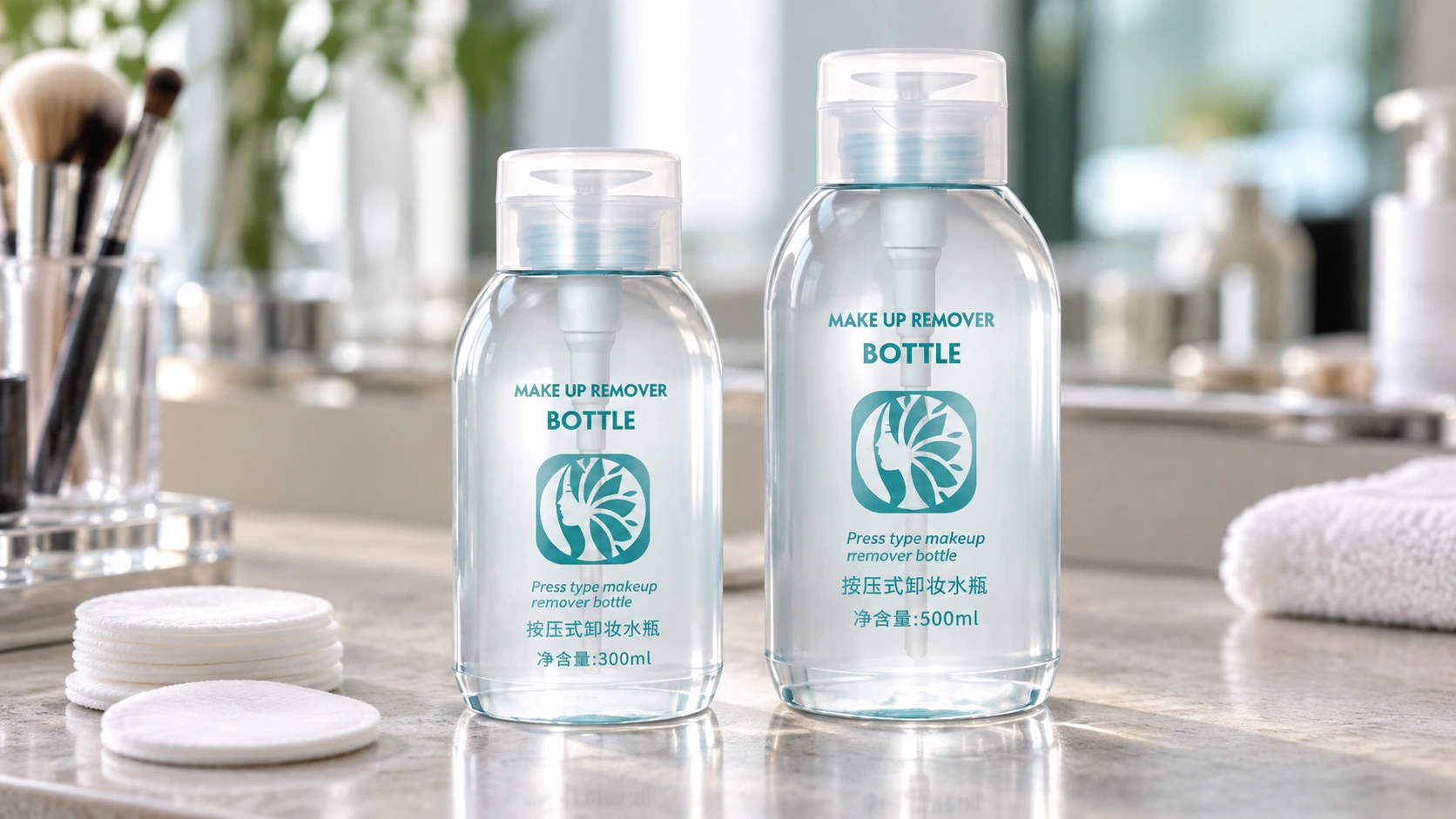
Select the formula, closure, capacity, and decoration in that order. A suitable bottle can leak, dispense too quickly, or become difficult to clean around the cap. Filled samples are more useful than an empty package approval.
Separate Retail and Salon Use Cases
Retail buyers should define where the product will be stored, whether the user dispenses onto cotton, hands, or a reusable pad, and how the bottle will be transported after purchase. A tamper-evident feature, an overcap, or a locking pump may be relevant depending on the closure and distribution model. The label panel and front-facing silhouette also matter, but they should not override functional approval.
Salon buyers should map the service workflow. A technician may operate the package many times per day, sometimes with damp or gloved hands. The closure should dispense quickly without flooding a pad, remain clean around the outlet, and reclose without slowing the service. If the same formula will be sold at retail and used in the salon, decide whether one bottle family can support both sizes without compromising ergonomics.
Match Formula Type to Bottle and Closure
The closure decision begins with how the formula moves and how the user receives it. Low-viscosity removers need flow control; bi-phase products must remain easy to shake and dispense; oils need materials and seals that tolerate prolonged contact; and lotions need an orifice or pump that does not require excessive force.
| Formula | Possible closure route | Approval focus |
| Micellar water | Disc top, flip top, controlled orifice, or pad pump | Flow rate, splash, pad saturation, reclosing, evaporation |
| Bi-phase remover | Screw or flip closure with controlled opening | Shake space, seal integrity, phase contact, clean pouring |
| Cleansing oil | Pump, locking pump, or controlled flip top | Seal compatibility, drip-back, residue, transit leakage |
| Remover lotion | Pump or larger controlled orifice | Priming, force, dose repeatability, clogging, near-empty delivery |
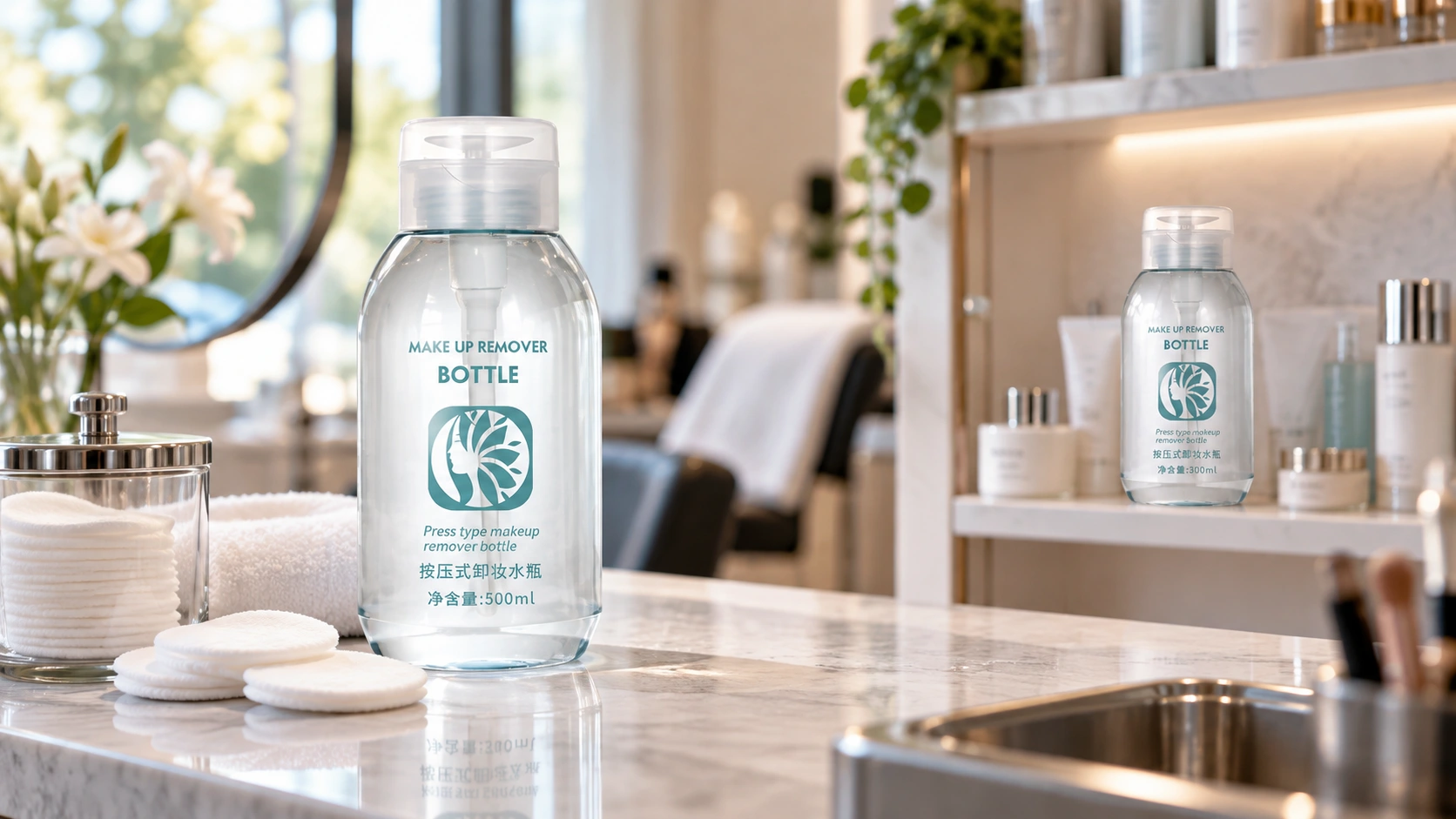
A disc top or flip top can work when the user inverts the bottle over a pad, but the orifice must prevent a sudden surge. A pad pump can support one-handed use, although it increases the number of wetted components and requires cleaning and evaporation checks. A treatment pump can suit oil or lotion, but its dip tube, gasket, actuator, and output should be tested with the commercial formula.
Do not specify a closure by name alone. Record the neck finish, liner or gasket, dip tube, overcap, locking feature, and target output. Two pumps that look similar may behave differently because of internal geometry and component tolerances.
Choose Capacity From the Selling and Service Model
Capacity should reflect dose, use frequency, replenishment cycle, shelf space, and shipping weight. A retail brand can compare a compact introductory size with a core size by calculating cost per usable application and expected time in the consumer’s home. A salon can compare a back-bar size with smaller station bottles by considering refilling policy, hygiene, technician reach, and daily throughput.
Use hypothetical fills only as screening points. For example, a team might compare 100 mL and 200 mL retail concepts, or 250 mL and 500 mL professional concepts, but the final choice should follow the measured dose and the economics of the specific formula. Larger does not automatically mean better value once filled weight, carton strength, storage, and leakage exposure are included.
Confirm that the selected bottle has sufficient headspace for filling and, where applicable, shaking. Check label claims and local net-content requirements with the responsible regulatory team. The supplier should confirm the nominal and practical fill for the exact bottle rather than relying on the product name or a catalog image.
Verify Formula Compatibility and Leakage
Build a filled compatibility plan
Expose every wetted component to the actual formula and inspect the bottle, cap, gasket, liner, dip tube, spring path where applicable, and decoration. Watch for haze, discoloration, odor change, stress cracking, swelling, softening, loss of seal, pump drag, and changes in formula appearance or viscosity. Define the storage conditions and review points with the formulator, filler, and packaging supplier.
Test use and transport conditions
Check upright, side, and inverted positions when they reflect storage or transport risk. Add temperature cycling and distribution simulation appropriate to the route. Inspect immediately after the test and again after a dwell period. Repeat the leak check after several openings because threads, liners, and flip hinges can behave differently after use.
For salon packs, add a repeated-use trial that represents a busy service day. Measure the amount delivered to a pad, residue around the closure, hand grip, and whether the bottle stays stable on the work surface. For retail packs, include consumer reclosing, bathroom storage, and a travel scenario if the product is marketed for travel.
Customize Only After the Working Pack Is Approved
Color, printing, coating, hot stamping, and labels should be applied to the approved bottle and closure combination. Decoration can affect scuffing, grip, visibility of fill, recycling decisions, and the usable label area. Ask for a decorated sample when color match, adhesion, or oil resistance matters.
Jaunce Industrial lists a PET makeup remover bottle with a PP flip cap and accepts customized color and several surface-finish options on that product page. Treat it as one configuration route and confirm the final capacity, closure, decoration, and commercial terms for the selected model. The wider plastic bottle range can be used to compare alternative forms.
If the material decision is still open, the glass and PET bottle comparison provides a separate starting point. Material choice should remain tied to formula contact, closure fit, filled weight, appearance, distribution, and the brand’s recovery or recycling plan.
Prepare a Comparable RFQ
Jaunce Industrial’s packaging project support process asks buyers to provide product type, capacity, order quantity, decoration needs, target market, material, component structure, and sample requirements. The OEM/ODM packaging route can then address custom development after the functional specification is clear.
For each SKU, include formula type, approximate viscosity, target dose, bottle material, capacity, closure components, quantity, decoration, filling location, destination market, packing method, and test criteria. State whether the retail and salon sizes must share one design language or one closure platform. Ask suppliers to separate bottle-only and complete-assembly pricing so quotations can be compared on the same scope.
Jaunce Industrial should also receive the intended sample sequence: stock component review, filled functional trial, decorated sample, and pre-production reference where required. Retain the approved filled sample and written specification so later orders can be checked against the same configuration.
Conclusion
Select makeup remover packaging by matching the formula to a controlled dispensing path, then size the bottle for the retail or salon workflow. Approve the complete filled assembly through compatibility, repeated-use, and leakage checks before committing to decoration. This sequence gives buyers a clearer basis for comparing suppliers and reduces late changes during filling or launch preparation.
To discuss a specific retail or salon project, request a packaging fit review with the formula type, preferred closure, capacity options, quantity by SKU, decoration, filling location, and destination market.
Frequently Asked Questions
Which closure is best for micellar water?
A controlled flip top, disc top, or pad pump may work. Compare flow rate, pad saturation, evaporation, cleanliness, reclosing, and leakage with the filled formula before approval.
Can one bottle serve retail and salon sizes?
Possibly, if the family supports the required capacities and the closure remains ergonomic in both settings. Test grip, stability, output, and repeated use for each size rather than assuming scale alone will work.
Does PET work for every makeup remover?
No material should be approved by category name alone. Test the actual formula against the bottle, closure, gasket, decoration, and storage conditions planned for the finished product.
What should a leak test include?
Include relevant orientations, temperature exposure, transport simulation, opening and reclosing, repeated dispensing, and a defined inspection period. Record visible leakage, weight change, closure contamination, and package damage.
When should custom decoration begin?
Begin after the functional bottle and closure assembly passes filled testing. Then approve artwork, color, adhesion, scuff resistance, usable print area, and appearance on the exact components.